The industrial gate valves market is poised for significant advancements by 2026. These valves play a crucial role in controlling flow in various industries. According to recent reports, the global industrial gate valves market is projected to grow substantially, driven by rising demand in oil and gas sectors.
Innovative designs are emerging, focusing on improved durability and performance. Materials used in manufacturing these valves are evolving, enhancing their resistance to corrosion and high temperatures. Data from industry analysts suggest that companies investing in smart technologies will gain a competitive edge. Digital monitoring solutions are becoming more prevalent. However, many manufacturers still struggle to integrate these technologies effectively.
As we look ahead, it’s clear that industrial gate valves will continue to evolve. Yet, challenges such as supply chain disruptions and regulatory compliance remain. Stakeholders must be aware of these hurdles even as they innovate. Addressing these issues head-on will be vital for success in this dynamic market.

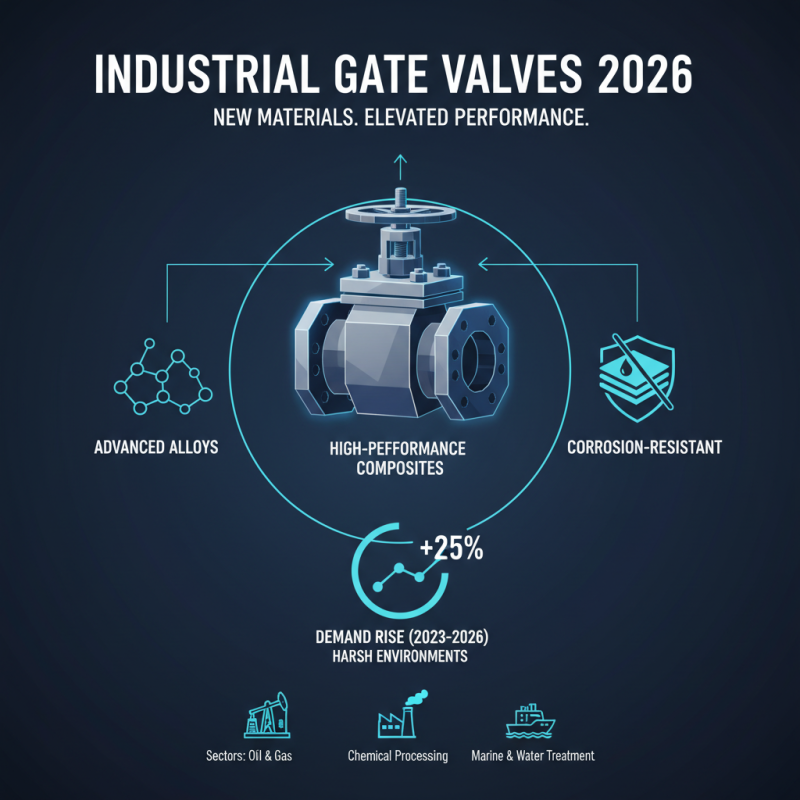
Emerging materials are set to elevate the performance of industrial gate valves in 2026. Advanced alloys and high-performance composites will dominate the market. According to a recent industry report, the demand for corrosion-resistant materials is projected to rise by 25% over the next three years. This shift addresses the challenges posed by harsh environments in various sectors.
For instance, new coatings are expected to increase lifespan and reduce maintenance costs. A study indicated that ceramic and polymer-based coatings could enhance durability by up to 40%. However, the adoption of these materials may face hurdles. The high initial cost might deter some manufacturers. Additionally, improper application could lead to failures, emphasizing the need for skilled technicians.
Sustainability is also a concern. Eco-friendly materials that meet performance standards are gaining traction. Research shows that the market for green materials in industrial valves may grow by 30% yearly. Yet, balancing environmental benefits with long-term performance remains a challenge. Continuous innovation and testing will be crucial to overcome these obstacles and improve industrial gate valve efficiency.
The integration of smart technology in industrial gate valves is revolutionizing the industry. Modern gate valves are increasingly equipped with sensors and IoT capabilities. This advancement allows for real-time monitoring of valve performance. Efficient tracking of flow rates and pressure is now possible. It leads to faster decision-making and reduced downtime.
However, the transition to smart systems is not without challenges. Many facilities face difficulties in maintaining outdated infrastructure. Compatibility issues can arise when new technology is introduced. Staff training is essential. Employees must adapt to the new systems and learn to interpret data effectively.
Despite these hurdles, the benefits are significant. Enhanced accuracy in operations can lead to substantial cost savings. Predictive maintenance reduces the likelihood of unexpected failures. This proactive approach ultimately extends the lifespan of equipment. Innovation in gate valves signifies a shift towards a more efficient and sustainable future. There is still much to consider, and continued assessment is crucial.
The sustainability movement is reshaping the manufacturing of industrial gate valves. Many manufacturers are now focusing on eco-friendly materials. This shift is not only beneficial for the environment but also enhances product longevity. Using recyclable materials reduces waste significantly. However, implementing these changes can be challenging.
Some manufacturers struggle with sourcing sustainable materials. The availability of high-quality alternatives is sometimes limited. Additionally, the cost of switching to sustainable options can deter companies. Not all valve designs easily adapt to eco-friendly innovations. Continuous improvement is essential to overcome these hurdles. The industry must also educate workers on sustainable practices.
Consumer demand for greener products is driving change. Businesses that invest in sustainable practices gain a competitive edge. It's a journey, not a destination. There is still much work to do. As the industry evolves, the focus remains on balancing sustainability with functionality. This is where innovation plays a critical role. Transitioning to sustainable manufacturing of gate valves is not without its difficulties. But the potential benefits make it a worthwhile endeavor.
The future of industrial gate valve operations is leaning heavily towards automation. Automation can enhance efficiency and reliability. As industries strive for cost reduction, it offers a solution. Automated valves provide precise control. They can minimize human errors and reduce downtime.
The integration of smart technologies is another area to watch. Sensors and AI can monitor valve performance in real time. This provides critical data on wear and tear. However, the reliance on technology comes with risks. Cybersecurity concerns are paramount. A single breach could lead to significant operational disruption.
Challenges remain in adapting existing systems for automation. Not all facilities are ready. Some may struggle with integrating new technologies. Training workers to understand automation is crucial. There's a need for a balance between technology and skilled labor. Exploring these dynamics is vital for a successful transition in the industrial sector.
The industrial gate valve market is evolving rapidly. Key players are pushing boundaries with innovative designs and materials. Lightweight composites are becoming increasingly popular. These materials not only reduce the overall weight but also enhance durability against corrosion.
Additionally, advancements in smart technology are making waves. Many companies are integrating IoT capabilities into gate valves. This allows for remote monitoring and predictive maintenance. However, some manufacturers face challenges in ensuring data security. It’s crucial that they address vulnerabilities to gain user trust.
Sustainability is another focal point. Many players are exploring eco-friendly materials and practices. While some steps have been taken, the industry still struggles with thorough implementation. There is a growing need for transparency in production processes. These trends highlight the potential for growth but also reveal areas needing improvement.
| Trend/Innovation | Expected Impact | Market Segment | Technological Focus | Forecast Year |
|---|---|---|---|---|
| Smart Valve Monitoring | Improved efficiency and maintenance | Oil & Gas | IoT Integration | 2026 |
| Eco-Friendly Materials | Reduced environmental impact | Water Treatment | Sustainable Manufacturing | 2026 |
| Automated Actuation | Enhanced control and safety | Chemical Processing | Automation Technology | 2026 |
| Innovative Seal Designs | Increased reliability and lifespan | Power Generation | Material Engineering | 2026 |
| Enhanced Pressure Ratings | Better performance in high-demand applications | Mining | Engineering Innovations | 2026 |