How to Choose the Right Swing Check Valve for Your Needs?
Choosing the right swing check valve is crucial for optimal system performance. According to a recent industry report by the Valve Manufacturers Association, the global demand for check valves is expected to reach $6 billion by 2025. This growth underscores the importance of selecting a valve that meets specific operational requirements.
Industry expert John Roberts states, “A swing check valve is only as good as its application." This emphasizes that understanding your system's needs is vital. A valve that works well in one scenario may fail in another. For instance, factors like pressure, temperature, and fluid type heavily influence performance. Ignoring these variables can lead to costly mistakes.
Consider the materials and design of the swing check valve. Different environments call for unique features. Without proper assessment, users may choose subpar options. It's not just about availability; it's about finding the best fit. Real-world experience shows that many engineers overlook critical criteria, resulting in inefficiency and potential failure. Careful deliberation can make all the difference.

Understanding Swing Check Valves: Definition and Functionality
Swing check valves play a vital role in various piping systems. These devices allow fluid to flow in one direction while preventing backflow. Understanding their definition and functionality is crucial when selecting the right valve for your specific needs. According to industry reports, improper valve choice can lead to increased maintenance costs and fluid leaks.
When choosing a swing check valve, consider material compatibility and pressure ratings. The valve must withstand the conditions of your system. A recent survey indicated that 40% of valve failures stem from material degradation. Using the wrong material can result in failures and costly downtimes.
Tips: Always check the compatibility of the valve material with the fluid type. Regular maintenance checks are crucial. Look out for signs of wear and tear.
Functionality is another aspect to ponder. Knowledge of how swing check valves operate can prevent potential issues. They utilize a disc that swings open and closed, responding to flow changes. This action can be sensitive. If not adequately evaluated, it may lead to water hammer, damaging the piping system.
Tips: Analyze flow rates and patterns before installation. Assess provided data relating to pressure drop. Evaluate your system’s unique dynamics for optimal performance.
Understanding Swing Check Valves: Performance Comparison
This chart displays the flow capacity of various sizes of swing check valves, illustrating how the valve size impacts the flow rate. As the size increases, the flow capacity also increases, highlighting an important factor to consider when selecting the right swing check valve for your needs.
Key Factors to Consider When Selecting a Swing Check Valve
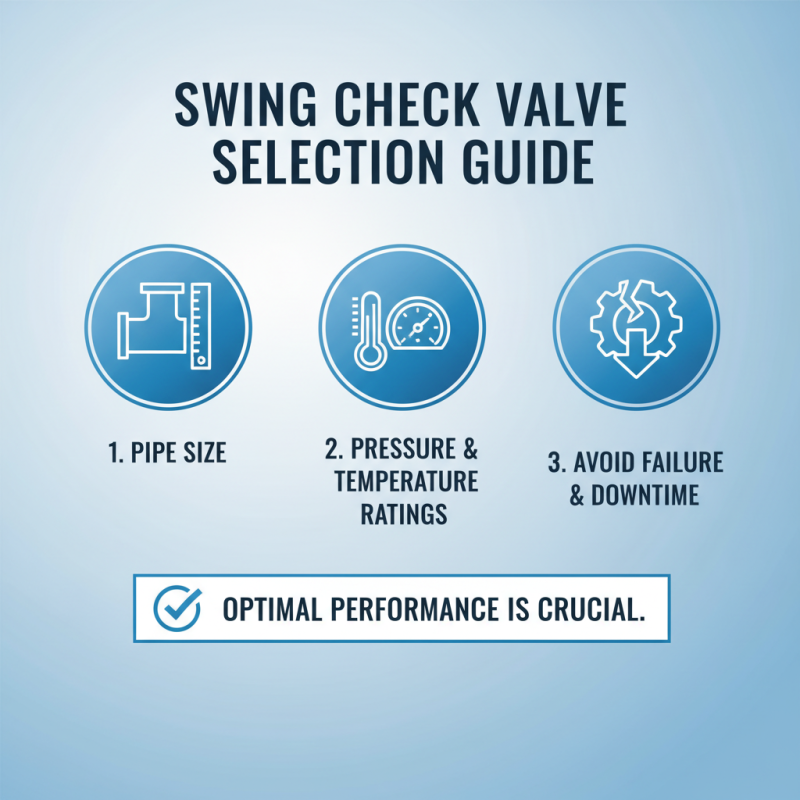
When selecting a swing check valve, several factors need careful consideration. First, you should factor in the pipe size. A valve that matches your existing pipe is crucial for optimal performance. Additionally, consider the pressure and temperature ratings. Valves have limits. Exceeding these can lead to failure, causing costly downtime.
Material choice also matters significantly. Common materials include stainless steel and PVC. Each material has pros and cons based on resistance to corrosion and pressure conditions. Don't overlook the flow direction. Proper orientation is key for functionality.
Finally, pay attention to maintenance requirements. Some valves need regular checks to ensure they operate well. An overlooked valve may lead to leaks or failure. It's essential to balance cost with long-term efficiency. A bit of research can prevent future issues and maintain system integrity.
Material Choices for Swing Check Valves: Corrosion Resistance and Durability
When selecting a swing check valve, material choice is crucial. It directly impacts corrosion resistance and durability. According to a recent industry report, 70% of valve failures stem from material degradation. This emphasizes the need to choose wisely.
Stainless steel is a popular choice due to its strength and resistance to rust. It performs well in harsh environments. A comparative study showed that stainless steel valves last 3-5 times longer than carbon steel in corrosive settings. However, they are costlier.
Plastic valves also deserve consideration. They are lightweight and resist many chemicals. Yet, their lower temperature tolerance can be a drawback. Some applications might demand a more robust solution. The right material ultimately depends on the specific application. A proven track record does not guarantee success in all environments. Consider the specific conditions you will face. Always conduct thorough research before deciding.
How to Choose the Right Swing Check Valve for Your Needs?
| Material |
Corrosion Resistance |
Durability |
Temperature Range (°F) |
Typical Applications |
| Stainless Steel |
Excellent |
High |
-40 to 150 |
Water, Oil, Gas |
| Brass |
Good |
Moderate |
-20 to 200 |
Water, HVAC |
| PVC |
Fair |
Low |
-20 to 140 |
Chemical, Wastewater |
| Ductile Iron |
Good |
High |
-20 to 250 |
Water, Fire Protection |
| Bronze |
Excellent |
High |
-40 to 200 |
Marine, Plumbing |
Sizing Your Swing Check Valve for Optimal Performance
Selecting the right swing check valve hinges on proper sizing. The valve's size must match the piping system to ensure optimal flow. According to the Hydraulic Institute, incorrect sizing can cause severe pressure drops and flow turbulence. A common mistake is choosing a valve that is too large or too small, resulting in inefficiencies.
To size your swing check valve, start with the pipe diameter. A valve should generally have a nominal diameter close to that of the pipeline. For example, a 2-inch pipe typically requires a 2-inch check valve. However, always consider the flow rate. If the velocity exceeds manufacturer recommendations, cavitation can occur, damaging the valve and system.
Another factor to consider is the application. Swing check valves used in water systems operate differently than those in gas lines. The Environmental Protection Agency suggests that adjusting for fluid type is crucial. Some fluids may need a different valve rating. Always check compatibility to avoid potential failures. If you’re unsure, consulting with flow analysis data can offer insights. Not every installation will be straightforward, and sometimes systems may need adjustments after installation.
Common Applications for Swing Check Valves in Various Industries
Swing check valves are essential in many industries. They prevent backflow in systems like water treatment, HVAC, and oil and gas. According to a report by MarketsandMarkets, the demand for swing check valves is expected to reach $1.6 billion by 2026. This growth is driven by increasing investments in infrastructure and the need for efficient fluid control systems.
In the water treatment sector, swing check valves are often used to ensure that water flows in one direction only. This prevents contamination and maintains system integrity. In HVAC systems, they help regulate airflow and maintain pressure. The oil and gas industry heavily relies on these valves for safety. A malfunction could lead to catastrophic failures, highlighting the importance of choosing the right type and size for each application.
However, selecting a swing check valve isn’t always straightforward. Factors like pressure, temperature, and fluid type must be considered. Some engineers overlook compatibility issues, leading to ineffective performance. This can result in costly downtime and repairs. It's crucial to evaluate specific needs carefully to avoid making the wrong choice. Proper analysis can enhance reliability and system longevity.