How to Choose the Right Globe Check Valve for Your Application
Choosing the right globe check valve can be a daunting task. Experts emphasize the importance of understanding specific application requirements. According to Dr. Emma Robinson, a valve industry specialist, "The right globe check valve significantly enhances system efficiency."
In the complex world of piping systems, globe check valves play a crucial role. Selecting the wrong type can lead to inefficiencies and costly downtime. Consider the materials used, pressure ratings, and flow direction. A careful assessment ensures optimal performance.
However, many buyers overlook vital aspects. They often focus solely on cost, neglecting quality. Real-world applications demonstrate that a well-chosen globe check valve can prevent leaks, boost reliability, and improve overall systems. Reflecting on choices can lead to better long-term decisions.
Understanding Globe Check Valves: Basics and Functionality
Globe check valves serve a crucial role in various applications. These valves control fluid flow effectively, allowing it to pass in one direction while preventing reverse flow. The design features a movable disk positioned against a stationary seat. When the fluid pressure increases, it lifts the disk, allowing flow. When pressure drops, the disk closes, eliminating backflow.
Understanding the basics is vital. Globe valves are versatile, used in water, steam, and gas systems. Their unique shape leads to a higher pressure drop compared to other valves. This can be problematic in some applications. Users may overlook this detail, affecting overall system efficiency.
Material choice is also essential. Common materials include brass, stainless steel, and PVC. Each material behaves differently under various temperatures and pressures. This influences performance in specific applications. Some users rush this decision, only to face issues later. Proper investigation prevents future complications.
How to Choose the Right Globe Check Valve for Your Application
| Valve Size |
Material |
Pressure Rating (PSI) |
Temperature Range (°F) |
Connection Type |
Application |
| 1/2 inch |
Brass |
150 |
-20 to 180 |
Threaded |
Water Supply |
| 1 inch |
Cast Iron |
300 |
-10 to 200 |
Flanged |
HVAC Systems |
| 2 inch |
Stainless Steel |
600 |
0 to 300 |
Welded |
Chemical Processing |
| 3 inch |
Plastic |
150 |
-40 to 140 |
PVC |
Water Treatment |
| 4 inch |
Carbon Steel |
300 |
-20 to 250 |
Buttweld |
Oil and Gas |
Key Factors to Consider When Selecting a Globe Check Valve
Choosing the right globe check valve for your application involves several key factors. You need to consider the flow direction. Globe check valves typically allow flow in one direction only. Ensure that your application fits this requirement.
Also, think about the pressure and temperature ratings. Each valve has specific limits. Exceeding these can lead to failure. Additionally, material compatibility matters. The fluid type you are using affects this choice. Certain materials corrode more easily, impacting longevity.
Installation space is another factor to weigh. Globe check valves may require more room than other types. Size can be a limiting factor in many settings. Addressing these factors helps narrow down the options. Reflect on how each factor aligns with your needs. This thought process can seem cumbersome but is essential for effective choices.
Material Options for Globe Check Valves: Pros and Cons
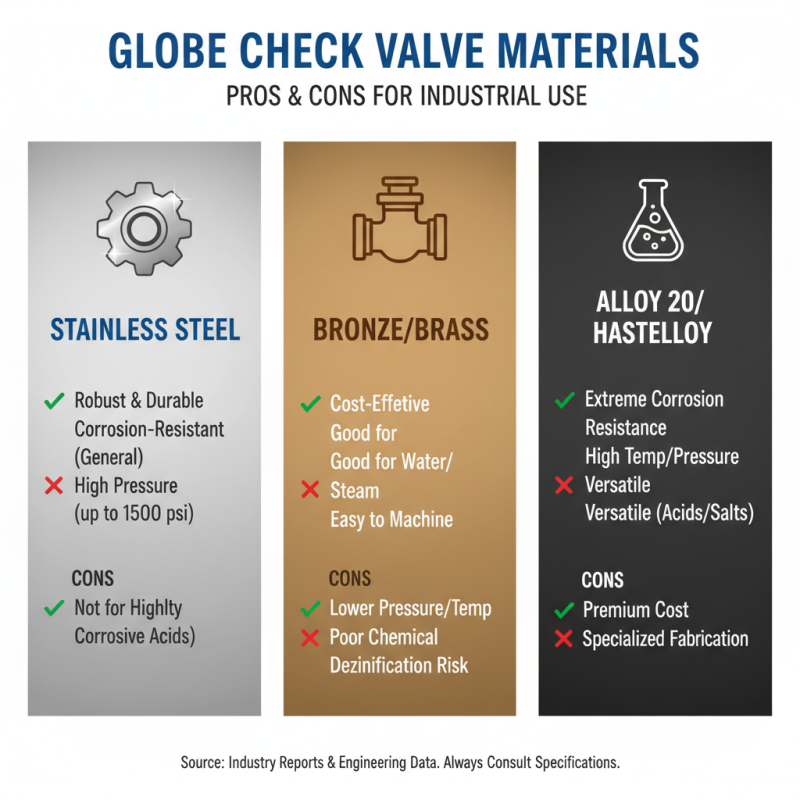
When selecting a globe check valve, material choice is critical. Each material has unique benefits and potential drawbacks. For instance, stainless steel is robust and resistant to corrosion. Reports indicate it can withstand pressures up to 1500 psi. However, it may not be suitable for highly corrosive environments.
On the other hand, PVC valves are lightweight and affordable. They handle temperatures well, particularly in water applications. Some studies suggest they can last up to 10 years in certain settings. Still, PVC is less durable under high-pressure conditions. This choice might lead to early failure, a significant concern for some industries.
Cast iron offers a compromise between durability and cost. It withstands higher pressures than PVC but can rust over time. Manufacturers suggest using proper coatings to extend its life. However, not all industries prioritize these coatings, leading to rust issues. Balancing material cost with performance is key in the decision-making process. Each application requires careful consideration to avoid future failures.
Sizing Your Globe Check Valve for Optimal Performance
Selecting the right size for your globe check valve is crucial for achieving optimal performance. Sizing involves considering flow rates, pressure drops, and temperature ranges. According to a report by the Flow Control Association, improper sizing can lead to energy losses up to 25%. This loss occurs when the valve is either too large or too small for the application.
When sizing a globe check valve, start by evaluating your system's specifications. Calculate the flow rate in gallons per minute (GPM) required for your application. Next, determine the pressure drop. If the pressure drop is too high, it may indicate that the globe check valve is not suitable. A study from the Valve Manufacturers Association indicates that 40% of operational problems stem from incorrect valve sizing.
Another important factor is the fluid type. Different fluids can behave unpredictably under varying conditions. For instance, viscous fluids require larger valve sizes compared to water. This variability is often overlooked. Engineers must consider the entire system during the sizing process. A size that works for one application may fail in another due to these nuances. It requires careful consideration and sometimes, a bit of trial and error to ensure a perfect fit.
Common Applications and Best Practices for Globe Check Valves
Globe check valves play a crucial role in various applications, including water treatment, HVAC systems, and industrial processes. They control flow direction and offer resistance to backflow effectively. According to a recent industry report, over 40% of manufacturing plants rely on globe check valves for their operational efficiency. These valves can prevent potential damages to pipes and equipment due to reverse flow.
When selecting a globe check valve, consider the specific needs of your application. Factors include temperature, pressure, and fluid type. A valve rated for high pressure might not be suitable for low-flow applications. Tips for maintaining these valves include regular inspections for wear and tear. A simple check can prolong their lifespan and overall system efficiency.
Another aspect is the installation angle. Globe check valves can be installed in horizontal or vertical positions, but horizontal installations often offer better performance. Ensure that the valve allows for easy maintenance access. This often gets overlooked, leading to costly downtimes. Evaluate whether your team has sufficient experience to handle installations and repairs. It’s a detail worth reflecting on for long-term reliability.